
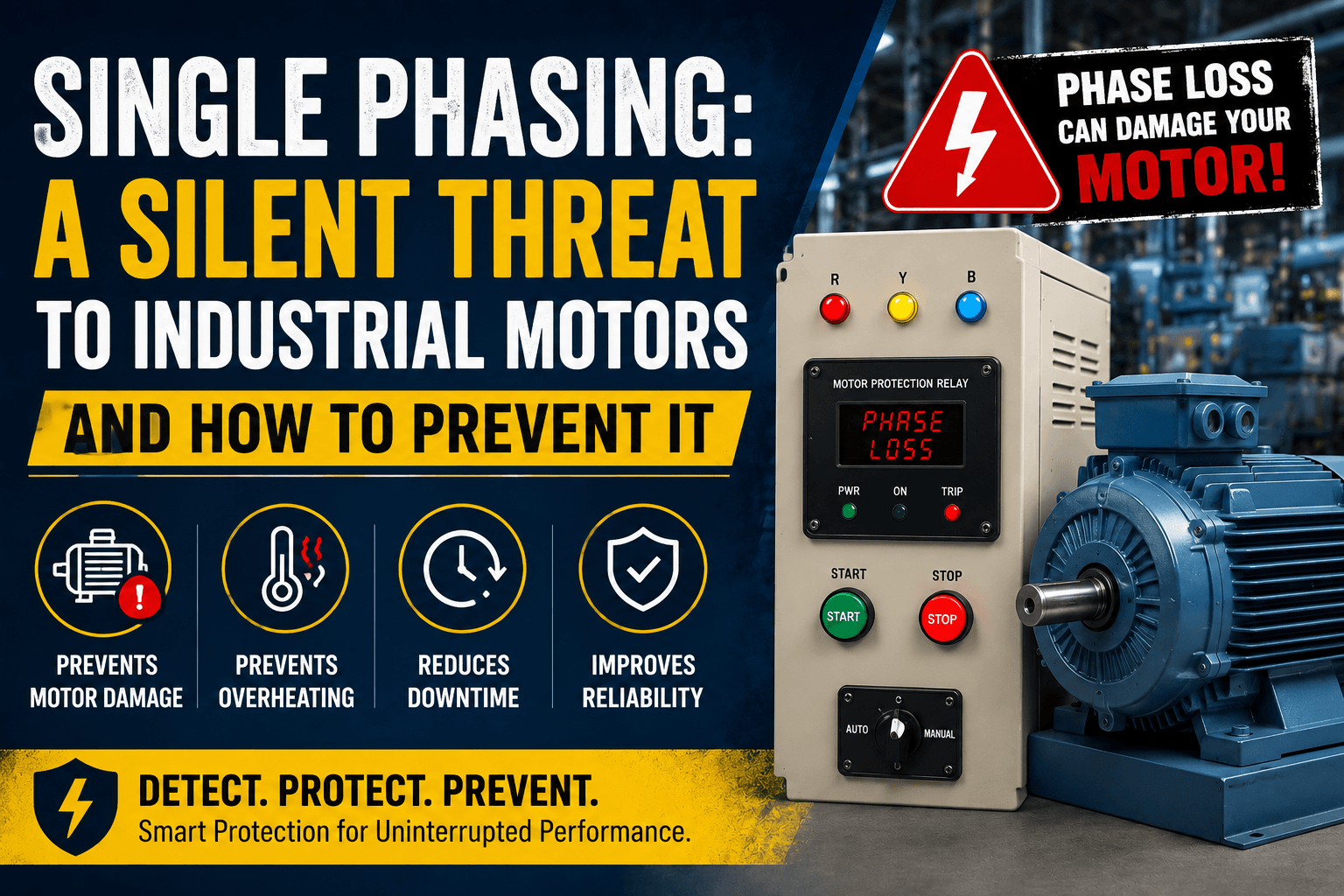
Single Phasing: A Silent Threat to Industrial Motors and How to Prevent It
Industrial motors are designed to operate efficiently on a balanced three-phase power supply. However, one of the most common and dangerous electrical faults affecting motors is Single Phasing.
Often unnoticed until damage occurs, single phasing can lead to overheating, production downtime, expensive repairs, and complete motor failure. Understanding this problem and implementing the right protection system is essential for every industrial facility.
What is Single Phasing?
Single phasing occurs when one phase of a three-phase power supply is lost while the motor continues to operate on the remaining two phases.
This condition can happen due to:
- Blown fuse
- Loose electrical connections
- Faulty contactors
- Damaged cables
- Utility supply issues
- Circuit breaker faults
Even though the motor may continue running, it is operating under highly unsafe conditions.
Why Is Single Phasing Dangerous?
When a motor loses one phase, the current in the remaining phases increases significantly.
This can result in:
1. Motor Overheating
Excess current generates heat inside the motor windings, leading to insulation damage and reduced motor life.
2. Reduced Motor Efficiency
The motor struggles to maintain performance, causing increased power consumption and reduced output.
3. Production Downtime
Unexpected motor failures can halt entire production processes and create costly downtime.
4. Equipment Damage
Continuous operation under single phasing conditions may damage starters, contactors, cables, and other connected equipment.
Warning Signs of Single Phasing
Operators and maintenance teams should watch for:
- Unusual motor noise
- Excessive motor heating
- Reduced motor speed
- Frequent tripping
- Burning smell
- Increased energy consumption
- Vibration during operation
Ignoring these warning signs can lead to complete motor burnout.
Industries Most Affected
Single phasing can impact almost every industry that relies on electric motors, including:
- Manufacturing Plants
- Textile Industries
- Water Supply Systems
- Agriculture Pumps
- HVAC Systems
- Chemical Industries
- Commercial Buildings
- Food Processing Facilities
How Single Phasing Protection Works
Modern motor protection systems continuously monitor all three phases of the power supply.
When a phase failure is detected, the protection system:
- Identifies the fault instantly.
- Disconnects the motor safely.
- Prevents overheating and damage.
- Alerts operators to the issue.
This rapid response protects valuable equipment and minimizes operational losses.
Benefits of Single Phasing Protection
Improved Equipment Safety
Protects motors and electrical components from severe damage.
Reduced Maintenance Costs
Prevents expensive repairs and premature motor replacements.
Longer Motor Life
Ensures motors operate within safe electrical conditions.
Increased Reliability
Reduces unexpected shutdowns and production interruptions.
Better Energy Efficiency
Prevents motors from drawing excessive current during fault conditions.
Why Choose HELICS Motor Protection Solutions?
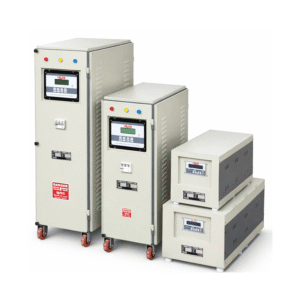
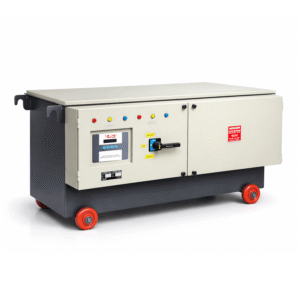
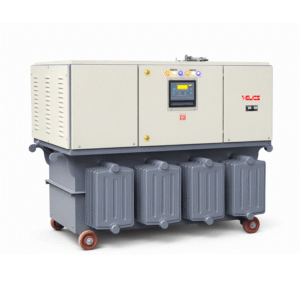
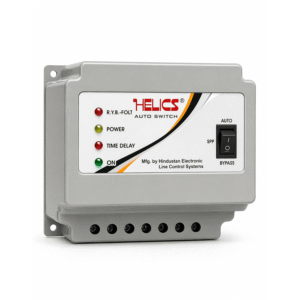
HELICS offers advanced motor starters and protection systems equipped with intelligent monitoring features.
Key protection functions include:
- Single Phasing Protection
- Overload Protection
- High & Low Voltage Protection
- Dry Run Protection
- Phase Failure Detection
- Automatic Motor Safety Shutdown
Our solutions are trusted by industries across India for reliable performance and long-term protection.
Conclusion
Single phasing is one of the most overlooked causes of industrial motor failure. While the problem may appear small, the resulting damage can be significant.
By investing in a reliable motor protection system, businesses can safeguard their equipment, improve operational reliability, and avoid costly downtime.
Protect your motors before a fault becomes a failure. Choose advanced protection solutions that keep your operations running safely and efficiently.
Need Help Selecting the Right Motor Protection System?
Contact HELICS today to explore our complete range of motor starters and industrial protection solutions.

Add comment